+34Kontinente:EUAS




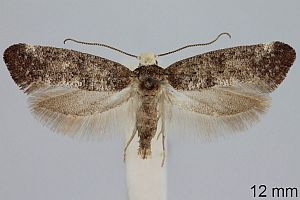
1. Lebendfotos
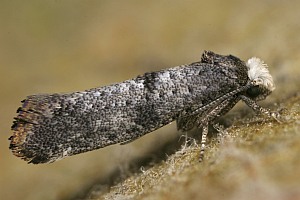
1.1. Falter



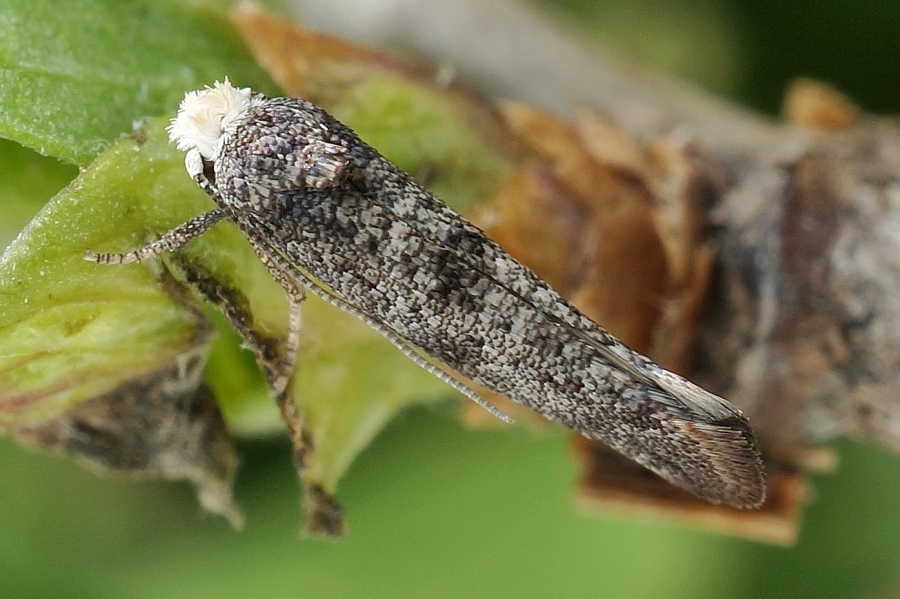
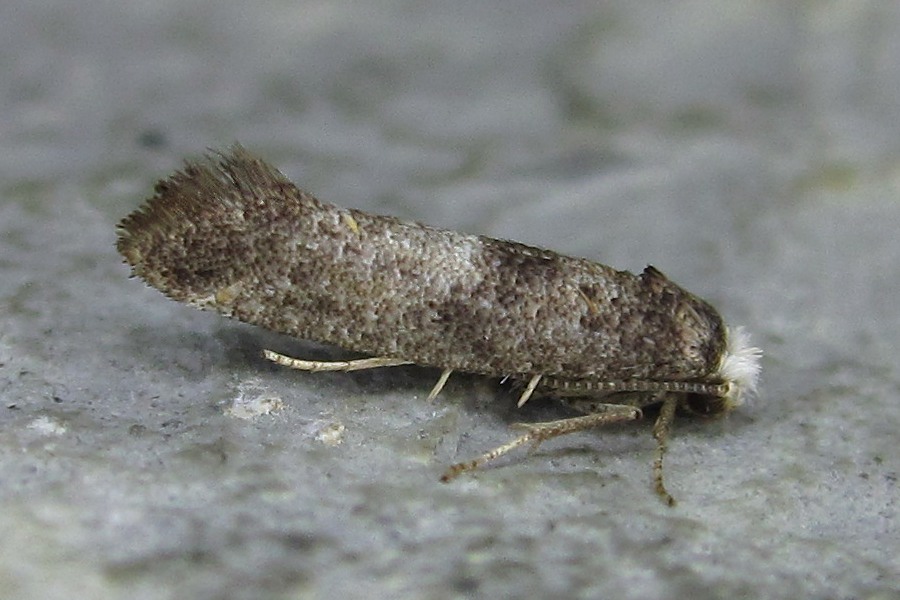

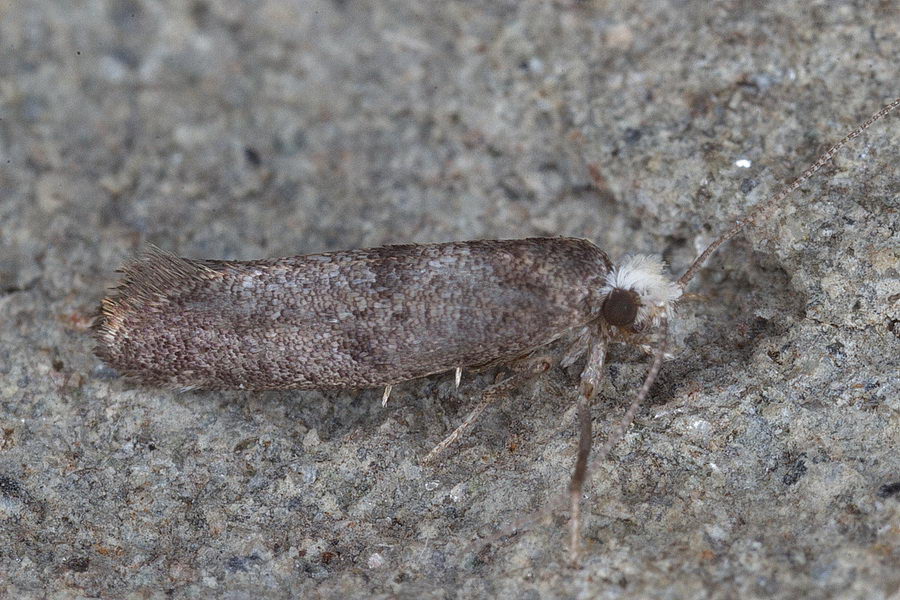
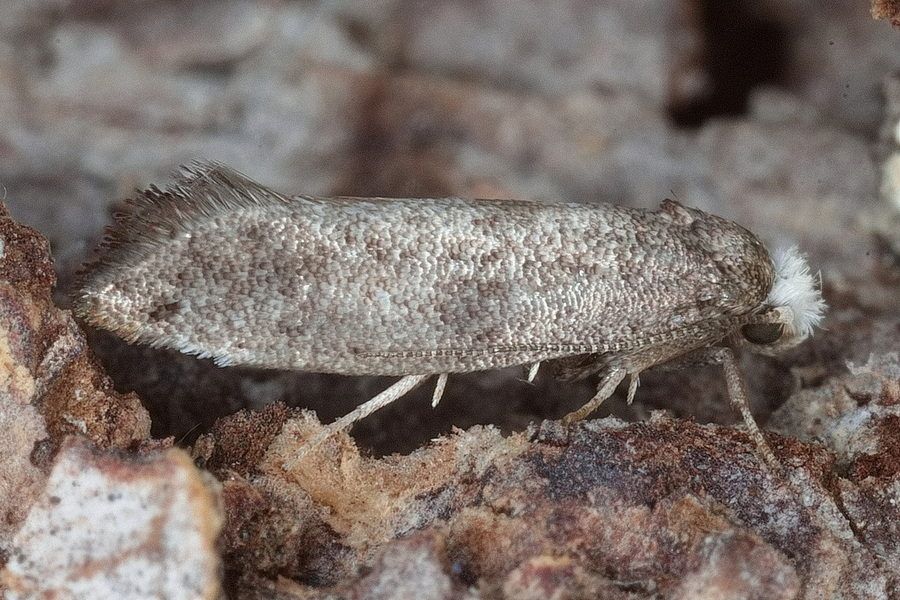

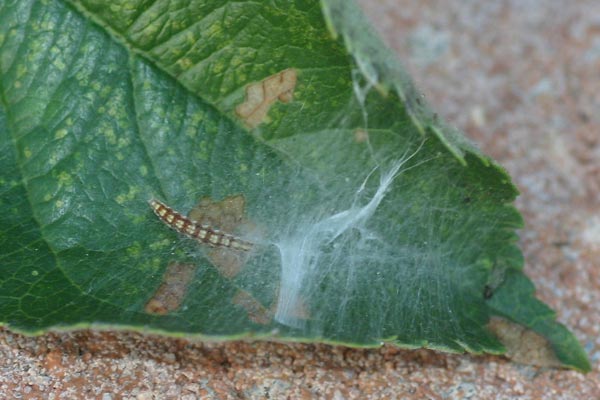
1.2. Raupe




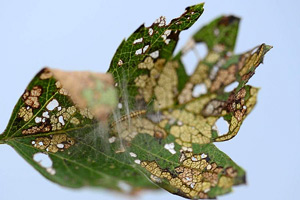
1.3. Fraßspuren und Befallsbild


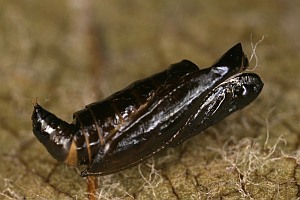
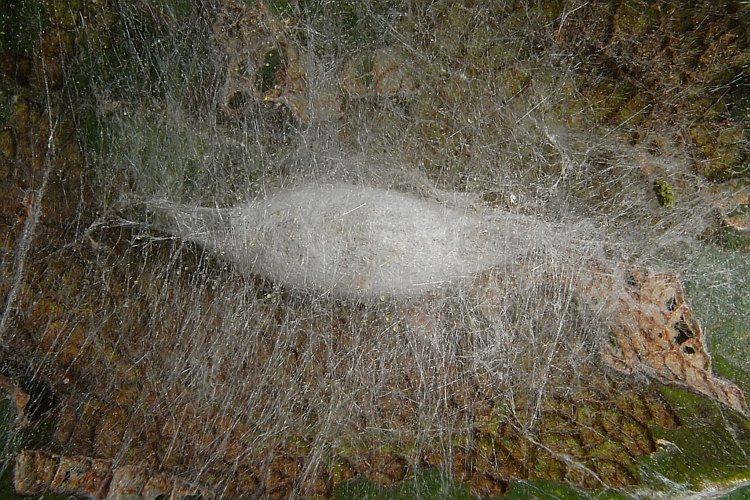
1.4. Puppe

2. Diagnose
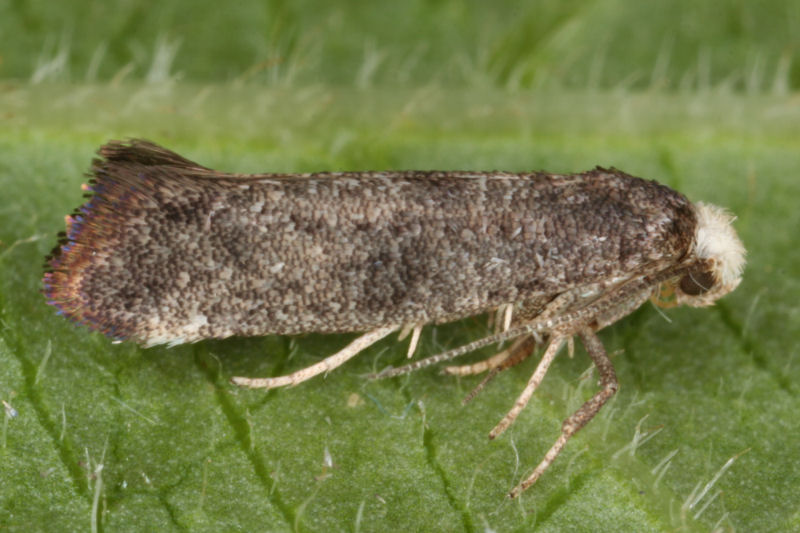
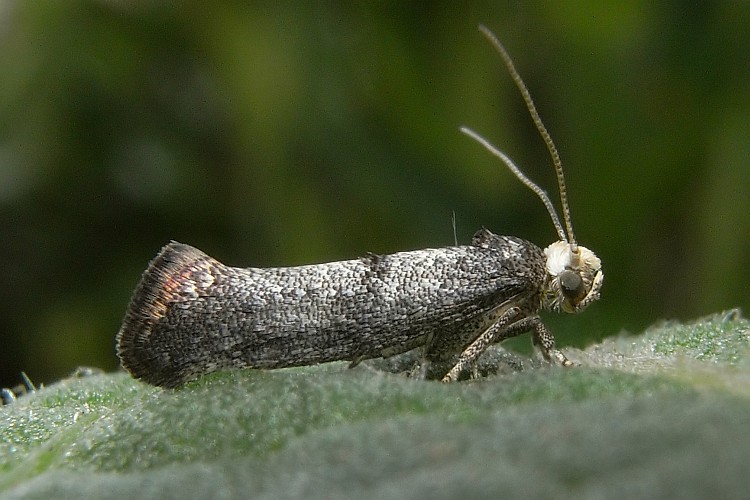
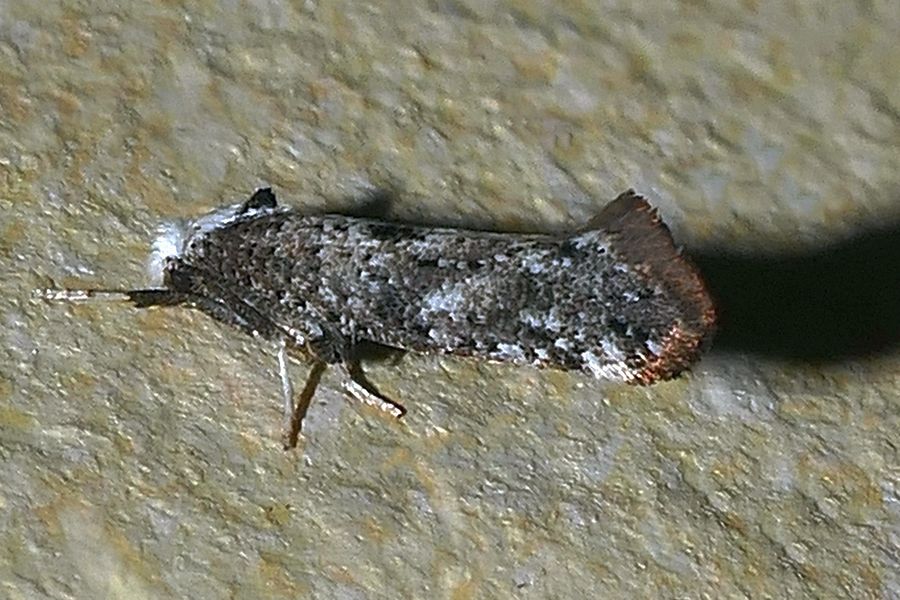
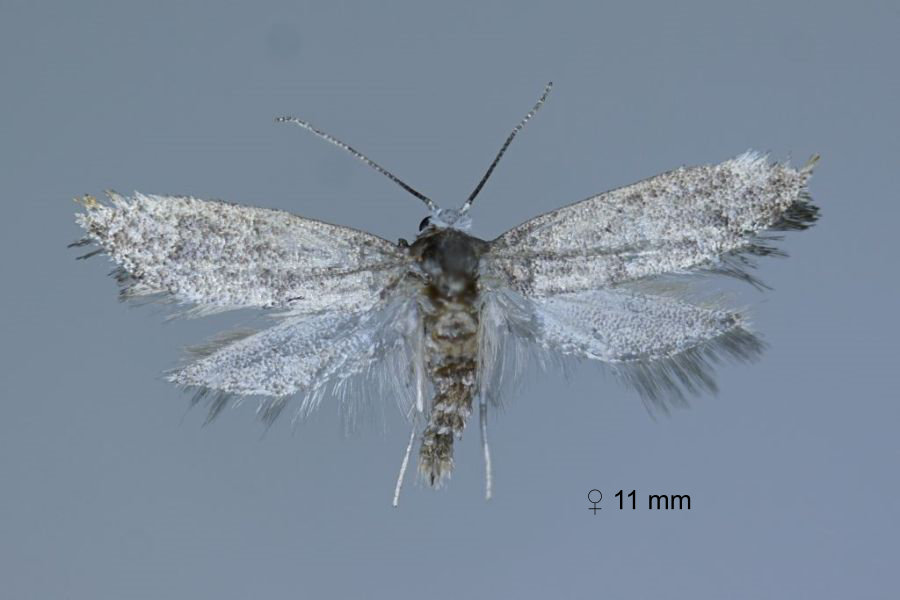
Frische Falter können an dem rötlichen Glanz erkannt werden, der sich um den Vorderflügel-Apex ausbreitet.
Nach [Rudolf Bryner]
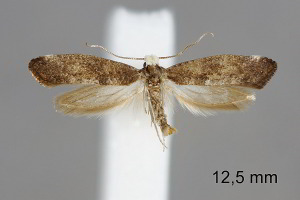
2.1. Männchen
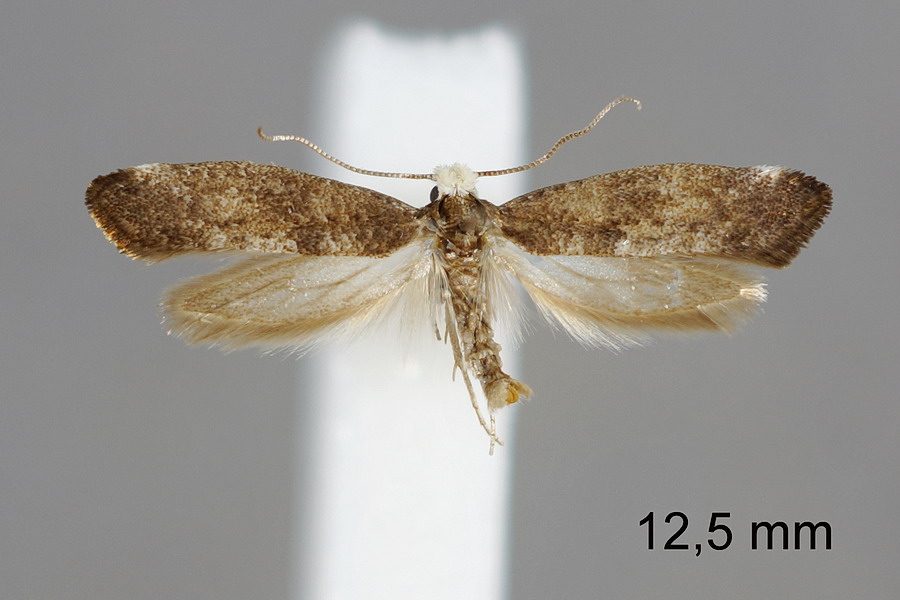


Ein hier bis zum 16. März 2022 gezeigte Falter war fehldeterminiert und wurde nach Paraswammerdamia nebulella verschoben.
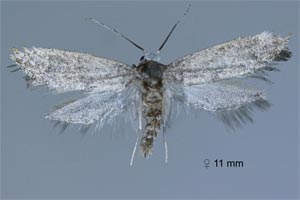
2.2. Weibchen
2.3. Geschlecht nicht bestimmt

2.4. Ähnliche Arten
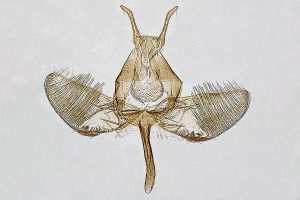
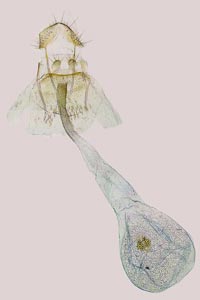
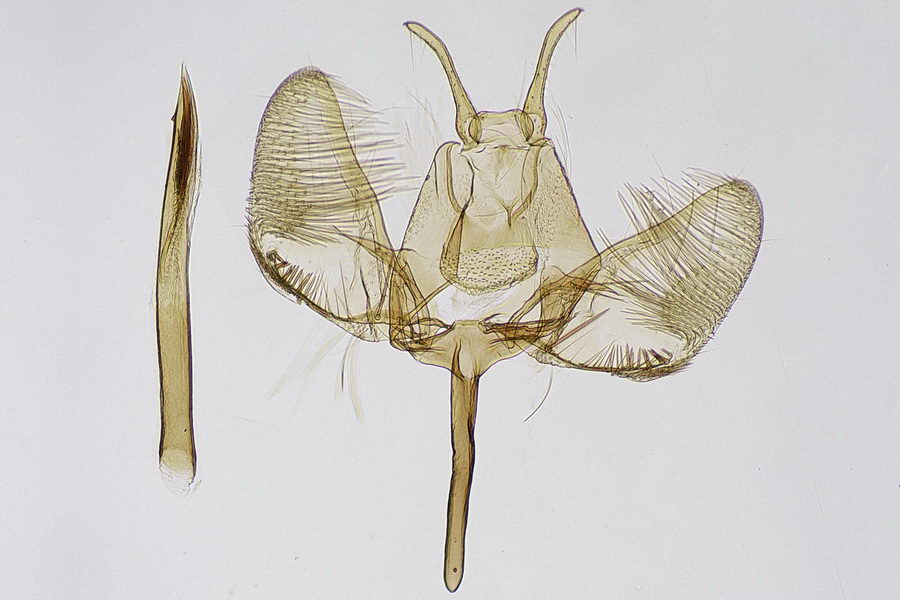
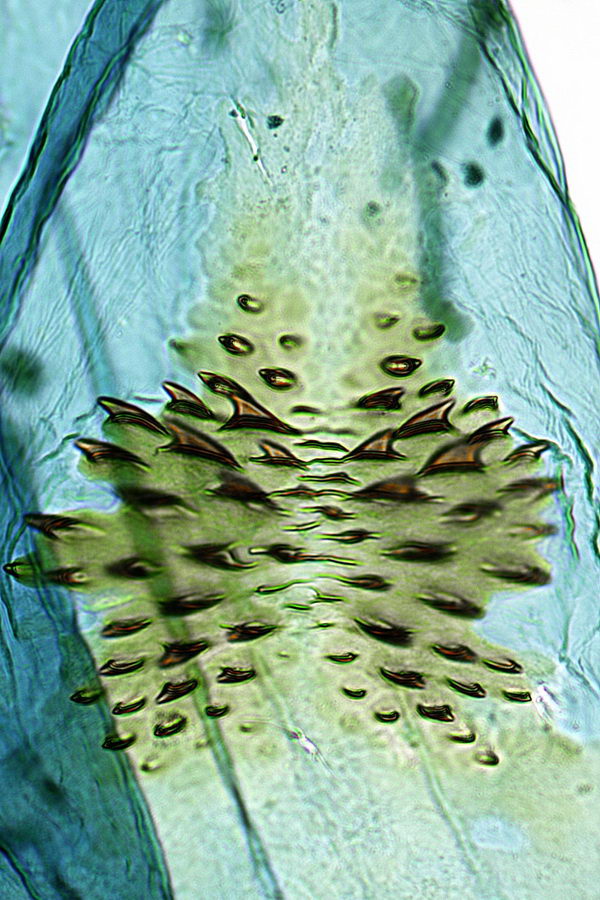
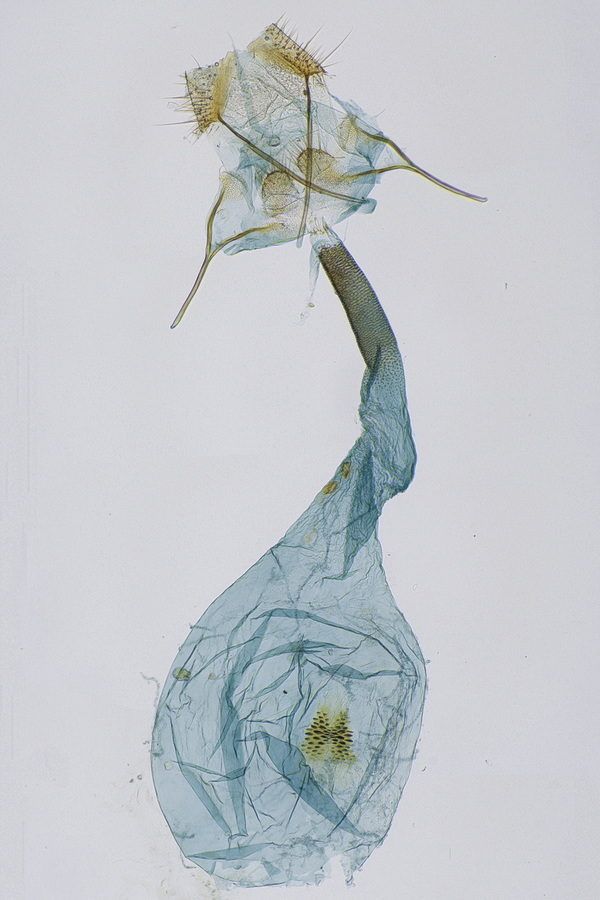
2.5. Genitalien
2.5.1. Männchen



2.5.2. Weibchen



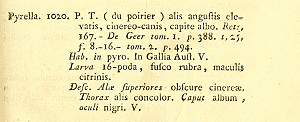
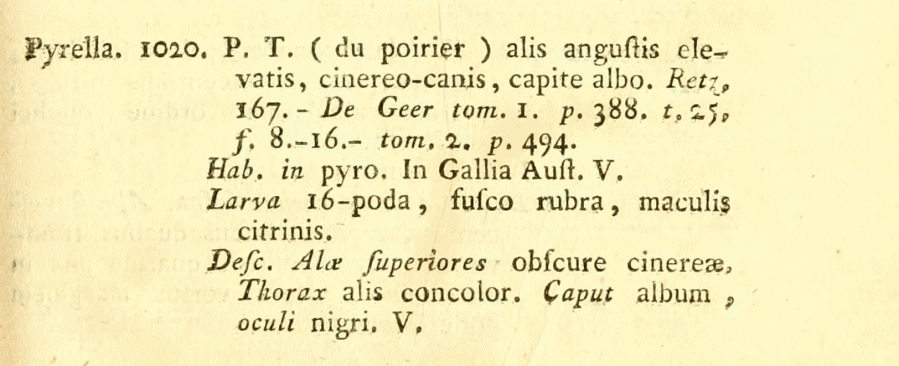
2.6. Erstbeschreibung
3. Biologie
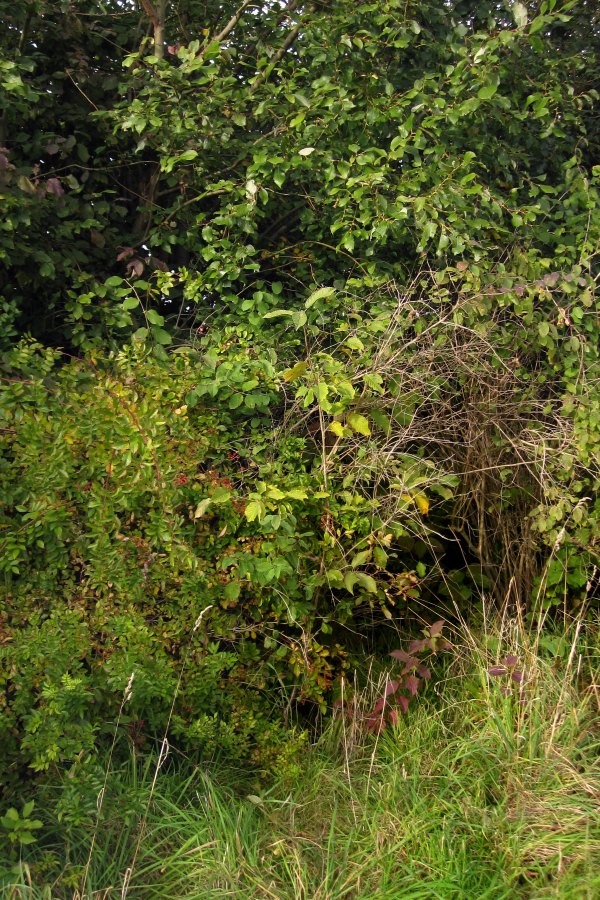
3.1. Habitat


3.2. Nahrung der Raupe
- [Rosaceae:] Pyrus communis (Kultur-Birne)
- [Rosaceae:] Pyrus cordata [= Pyrus pyraster ssp. cordata] (Herzblättriger Birnbaum, Herzblättrige Birne)
- [Rosaceae:] Malus domestica (Kultur-Apfel)
- [Rosaceae:] Crataegus sp. (Weißdorn)
- [Rosaceae:] Prunus cerasus (Sauerkirsche)
- [Rosaceae:] Prunus spinosa (Schlehe)
- [Rosaceae:] Prunus avium ? (Süß-Kirsche, Vogel-Kirsche ?)
- [Rosaceae:] Prunus sp.
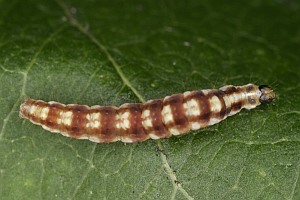
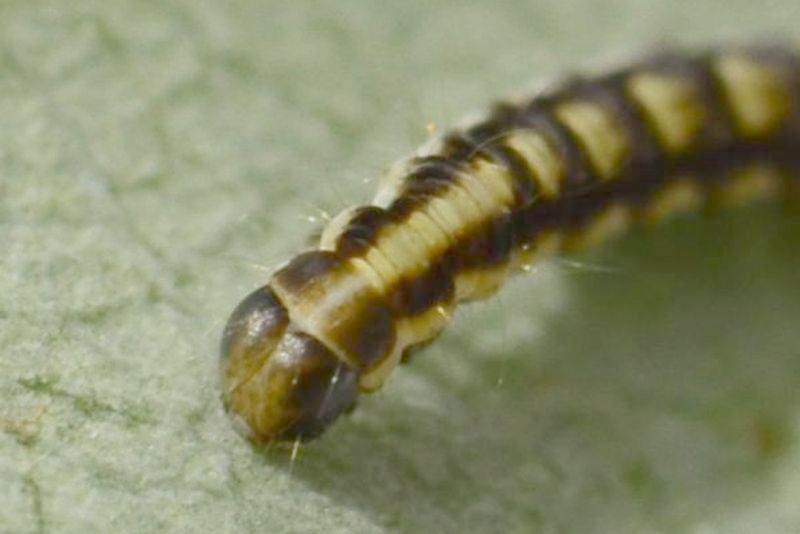
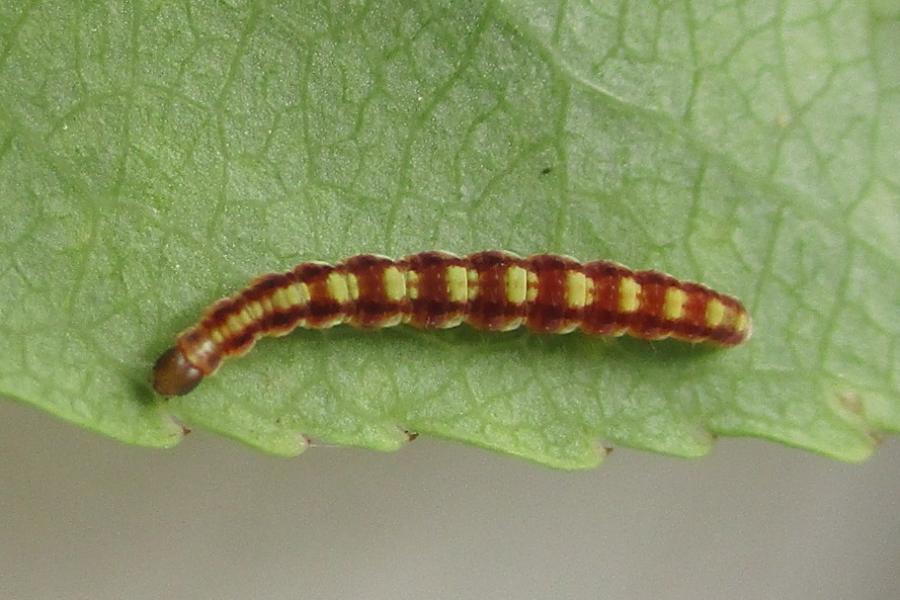
Die Raupe lebt an einer Reihe von Gehölzen der Familie Rosaceae. Durch unsere Mitarbeiter wurden mit obigen Bildern dokumentiert: Malus domestica, Crataegus sp. Prunus cerasus, Prunus sp. Corley et al. (2020: 616) melden aus Portugal einen Raupenfund an Pyrus cordata.
Beavan & Heckford (2015: 126) meldeten "Blackthorn Prunus spinosa L.: a larval foodplant of Swammerdamia pyrella (Villers, 1789) (Lep.: Yponomeutidae)" in England. Sie listeten die Literaturangaben und fuhren dann fort: "To these can now be added Blackthorn Prunus spinosa L. as a result of larvae that we found feeding on leaves of this on 30 September 2014 at Berry Head, Devon. The larvae were locally common. Their appearance is distinctive but because Prunus spinosa had apparently not been previously recorded as a British foodplant we collected a few just to be sure. Confirmation of our identification was provided when moths emerged in March this year. It is not entirely surprising that the larva feeds on Prunus spinosa because it is also known to feed on ‘cherry’. This name was given as a larval foodplant at least as long ago as 1870 (Stainton, 1870. The natural History of the Tineina 11: 76-78). Meyrick (1895. A Handbook of British Lepidoptera: 770; [1928]. A revised Handbook of British Lepidoptera: 737) and Ford (1949. A Guide to the smaller British Lepidoptera: 139) also give ‘cherry’ or ‘Cherry’. None gives the scientific name but it is likely that Wild Cherry Prunus avium (L.) L. or one of its cultivars was intended. No species of ‘cherry’ is cited by Agassiz in Emmet (loc. cit.) but Prunus cerasus [Dwarf Cherry Prunus cerasus L.] was included as a larval foodplant in 1988 (Emmet, 1988. A field Guide to the smaller British Lepidoptera (edn 2): 76). Prunus cerasus is much confused with Prunus avium and perhaps over-recorded (Stace, 2010. New Flora of the British Isles (edn 3): 197) and so it is possible that the latter was the species intended in the 1988 publication. It is unclear why no species of ‘cherry’ was cited in 1996." Die Autoren wundern sich, warum es bisher keine Angabe zu Prunus spinosa gab, obwohl der Falter ja weit verbreitet und relativ häufig ist. Der Grund könnte sein, dass die ebenfalls häufige Schlehe einfach eher ungern belegt wird.
(Autor: Erwin Rennwald)
4. Weitere Informationen
4.1. Andere Kombinationen
- Phalaena pyrella de Villers, 1789 [Originalkombination]
4.2. Synonyme
- Tinea cerasiella Hübner, [1813] [Digitalisat auf biodiversitylibrary.org]
- Erminea caesia Haworth, 1828
4.3. Literatur
- Beavan, S.D. & R.J. Heckford (2015): Blackthorn Prunus spinosa L.: a larval foodplant of Swammerdamia pyrella (Villers, 1789) (Lep.: Yponomeutidae). — The entomologist's record and journal of variation, 127 (3): 126. [Digitalisat auf biodiversitylibrary.org]
- Corley, M.F.V., Nunes, J., Rosete, J., Terry, R. & S. Ferreira (2020): New and interesting Portuguese Lepidoptera records from 2019 (Insecta: Lepidoptera). — SHILAP Revista de lepidopterología, 48 (192): 609-641. [PDF auf redalyc.org]
- Beschreibung als Tinea cerasiella: Hübner, J. [1796-1834]: Sammlung europäischer Schmetterlinge 8: pl. 1-71.
- SCHÜTZE (1931): 103
- Stainton, H. T. (1870): The natural history of the Tineina 11: I-XIII, 1-330, pl. I-VIII. London (John van Voorst) – Paris (Deyrolle) – Berlin (E. S. Mittler und Sohn). — Digitalisat auf archive.org: [76-87], [pl. II fig. 3].
- Erstbeschreibung: Villers, C. de (1789): Caroli Linnaei entomologia, faunae suecicae descriptionibus aucta; DD. Scopoli, Geoffroy, de Geer, Fabricii, Schrank, &c. speciebus vel in Systemate non enumeratis, vel nuperrime detectis, vel speciebus Galliae Australis locupleta, generum specierumque rariorum iconibus ornata. Tomus secundus. iii-xvi + 1-656 + 6 pl. Paris (Piestre et Delamilliere).